
If you’re an adult considering orthodontic treatment in Mumbai, you’re likely weighing two popular options: traditional braces and Invisalign clear aligners. The good news is that both methods effectively straighten teeth and correct bite issues, but they differ significantly in cost, appearance, comfort, and lifestyle impact. This comprehensive guide will help you understand which option aligns best with your budget, aesthetic preferences, and treatment goals.
Understanding Your Options
What Are Traditional Braces?
Traditional braces consist of metal or ceramic brackets bonded to your teeth, connected by wires that are periodically tightened to gradually shift your teeth into proper alignment. Modern braces have evolved significantly and now include options like tooth-colored ceramic brackets, self-ligating systems that reduce discomfort, and even lingual braces that attach behind your teeth for complete invisibility. Braces work 24/7 and are highly effective for treating complex orthodontic issues including severe crowding, significant bite problems, and rotated teeth.
What Is Invisalign?
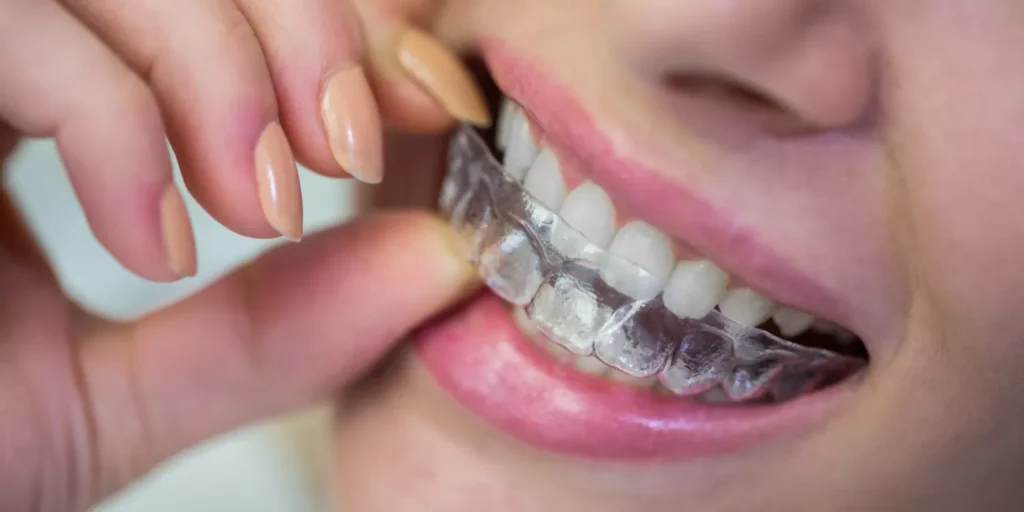
Invisalign uses a series of custom-made, removable clear plastic aligners that fit snugly over your teeth. Each set of aligners is worn for one to two weeks before moving to the next set in the series, gradually moving your teeth into the desired position. The aligners are virtually invisible, making them extremely popular among working professionals and adults who want to straighten their teeth discreetly. Unlike braces, Invisalign aligners can be removed for eating, drinking, brushing, and special occasions, offering unmatched convenience.
Cost Comparison in India (2025)
Traditional Braces Cost in Mumbai
The cost of traditional braces in India varies significantly based on the type you choose and the complexity of your case. Metal braces, the most economical option, typically range from ₹25,000 to ₹75,000 for complete treatment. Ceramic braces, which use tooth-colored or clear brackets for a more aesthetic appearance, cost between ₹35,000 to ₹95,000. Self-ligating braces like Damon braces, which use built-in clips instead of rubber bands for reduced friction and faster treatment, range from ₹40,000 to ₹1,25,000. Lingual braces, the most discreet traditional option that attaches behind your teeth, cost ₹80,000 to ₹1,50,000 due to custom fabrication and specialized expertise required.
Invisalign Cost in Mumbai
Invisalign treatment in India is considerably more expensive than traditional braces, with costs typically ranging from ₹1,20,000 to ₹3,50,000 depending on the complexity of your case and the number of aligners required. Simple cases requiring fewer aligners may fall on the lower end of this range, while complex treatments involving significant tooth movement can reach the higher end. Additional costs to consider include initial consultation charges (₹1,000-₹3,000), diagnostics like X-rays and 3D scans (₹5,000-₹15,000), follow-up visits (₹1,000-₹3,000 per visit), and post-treatment retainers (₹10,000-₹20,000). Many Mumbai dental clinics now offer flexible EMI payment options to make Invisalign more affordable for working professionals.
Cost Factors to Consider
Several factors influence the final cost of your orthodontic treatment beyond just the type of appliance you choose. The severity of your misalignment or bite issues directly impacts pricing—mild to moderate cases cost less than severe conditions requiring extractions or prolonged treatment. Treatment duration, which typically ranges from 12 to 24 months, affects the overall expense. Your orthodontist’s experience and reputation also play a role, with highly experienced specialists in well-established Mumbai clinics charging premium rates but offering higher success rates and advanced care. Clinic location matters too—dental practices in prime Mumbai areas like Bandra, Andheri, or South Mumbai often have higher costs due to overhead expenses.
Treatment Duration: How Long Will It Take?
Braces Timeline
The average treatment duration for traditional braces ranges from 12 to 24 months, though complex cases may require up to 30 months. Self-ligating braces often reduce treatment time compared to conventional braces because they use a clip mechanism that allows teeth to move more freely with less friction. During your braces treatment, you’ll need to visit your orthodontist every 4-6 weeks for adjustments and monitoring. The exact timeline depends on factors including the severity of misalignment, your age and bone density, how well you maintain oral hygiene, and your compliance with wearing elastics or other prescribed appliances.
Invisalign Timeline
Invisalign treatment typically takes 12 to 18 months for most adult cases, though this can vary based on complexity. Simple cases involving minor crowding or spacing may be completed in as little as 6-12 months, while more complex movements could extend to 24 months. One key advantage of Invisalign is that you’ll need fewer in-clinic visits—typically every 6-8 weeks—since there are no wires to tighten or brackets to adjust. However, the success of Invisalign heavily depends on patient compliance; you must wear the aligners for 20-22 hours per day, removing them only for eating, drinking anything other than water, and oral hygiene. Failure to wear aligners as prescribed can significantly extend treatment time.
Effectiveness: Which Works Better for Adults?
When Braces Are the Better Choice
Traditional braces remain the gold standard for treating complex orthodontic cases that Invisalign cannot effectively address. They’re particularly superior for severe crowding requiring tooth extractions, significant bite problems like deep overbites or underbites, teeth that need vertical movement or rotation, closing large gaps, and cases requiring precise tooth positioning. Braces work continuously since they’re permanently attached to your teeth, eliminating compliance issues. They also allow orthodontists to make precise adjustments at each appointment, giving them more control over tooth movement. For adults with complex dental issues, braces may be the only option to achieve optimal results.
When Invisalign Is the Better Choice
Invisalign excels for mild to moderate orthodontic cases and is particularly suitable for adults seeking a discreet treatment option. It works exceptionally well for mild crowding or spacing issues, minor bite corrections, relapse cases where teeth have shifted after previous orthodontic treatment, and patients who prioritize aesthetics during treatment. The clear aligners are virtually invisible, making them ideal for working professionals, public-facing roles, and adults who feel self-conscious about metal braces. Invisalign has advanced significantly in recent years and can now handle increasingly complex cases, though severe orthodontic problems still require traditional braces.
Lifestyle Considerations for Adults
Appearance and Confidence
For many adults, appearance is the primary consideration when choosing between braces and Invisalign. Traditional metal braces are highly visible and can make some adults feel self-conscious, especially in professional settings or social situations. Ceramic braces offer a compromise with tooth-colored brackets that blend with your natural teeth, though the wires are still somewhat visible. Invisalign’s clear aligners are virtually invisible from a conversational distance, allowing you to straighten your teeth without anyone noticing. This discretion makes Invisalign the overwhelmingly preferred choice for image-conscious adults, business professionals, and those in client-facing roles.
Comfort and Convenience
Comfort levels differ significantly between the two options. Traditional braces can cause mouth sores and irritation, especially during the initial adjustment period and after tightening appointments. The brackets and wires may poke or rub against your cheeks and lips, requiring orthodontic wax for relief. Invisalign aligners are made from smooth plastic that doesn’t irritate your mouth, offering greater comfort throughout treatment. They can be removed for important meetings, photo sessions, or special events, providing flexibility that braces cannot match. However, some patients experience temporary discomfort when switching to a new set of aligners every 1-2 weeks as teeth adjust to the new positioning.
Eating and Oral Hygiene
With traditional braces, you’ll need to avoid certain foods that can damage brackets or get stuck in wires, including hard foods like nuts and apples, sticky foods like caramel and chewing gum, crunchy snacks like popcorn and chips, and foods you bite into like corn on the cob. Brushing and flossing become more challenging and time-consuming with braces, requiring special tools like interdental brushes and floss threaders. Invisalign eliminates these restrictions completely—since the aligners are removable, you can eat and drink whatever you want without worry. Oral hygiene is also much simpler; just remove your aligners, brush and floss normally, and put them back in. This convenience is particularly valuable for busy adults who don’t want orthodontic treatment to disrupt their lifestyle.
Professional and Social Life
For working professionals in Mumbai, the impact on daily life is a crucial consideration. Traditional braces require frequent office visits every 4-6 weeks during business hours for adjustments, which can be challenging to schedule around work commitments. The visibility of braces may affect your confidence during presentations, client meetings, or networking events. Invisalign requires fewer office visits (every 6-8 weeks), and the virtual invisibility means colleagues and clients typically won’t notice you’re undergoing orthodontic treatment. You can remove aligners for important presentations, photographs, or social events if absolutely necessary, though this should be minimized to ensure treatment progresses on schedule.
Pros and Cons at a Glance
Traditional Braces Advantages
Braces offer several compelling benefits that make them the right choice for many adults. They’re significantly more affordable than Invisalign, with costs 50-70% lower depending on the type chosen. Braces are highly effective for complex cases that clear aligners cannot treat, including severe bite problems and significant tooth rotation. Since they’re permanently attached, there are no compliance issues—they work 24/7 regardless of patient discipline. Self-ligating and ceramic options provide improved aesthetics and comfort compared to traditional metal brackets. Treatment results with braces are highly predictable and proven over decades of use.
Traditional Braces Disadvantages
The drawbacks of braces are significant for many adults. They’re highly visible, which can impact confidence and professional image. Braces can cause discomfort, mouth sores, and irritation from brackets and wires. Food restrictions and difficult oral hygiene make daily life more challenging. Frequent adjustment appointments every 4-6 weeks are required throughout treatment. Emergency visits may be needed if brackets break or wires poke, causing unexpected disruptions.
Invisalign Advantages
Invisalign offers distinct benefits that appeal to adult patients. The aligners are virtually invisible, allowing discreet treatment that doesn’t affect your appearance or confidence. They’re removable, so you can eat whatever you want and maintain normal oral hygiene routines. The smooth plastic is comfortable and won’t irritate your mouth like metal brackets. Fewer office visits are required compared to braces, typically every 6-8 weeks. You can visualize your treatment outcome using 3D digital imaging before even starting, helping you understand the expected results.
Invisalign Disadvantages
Despite its advantages, Invisalign has limitations. The cost is substantially higher, ranging from 2-4 times more expensive than traditional braces. Invisalign is not suitable for severe or complex orthodontic cases requiring significant tooth movements. Success depends entirely on patient compliance—you must wear aligners 20-22 hours daily or risk extending treatment time significantly. The aligners can be lost or damaged since they’re removable, requiring costly replacements. Some patients find removing and cleaning aligners after every meal inconvenient, especially when eating out.
Making the Right Choice for You
Consider Your Budget
If cost is your primary concern, traditional braces offer effective treatment at a fraction of Invisalign’s price. Metal braces starting at ₹25,000-₹45,000 provide excellent value, while ceramic braces at ₹35,000-₹95,000 offer improved aesthetics without breaking the bank. Invisalign’s premium pricing of ₹1,20,000-₹3,50,000 reflects its advanced technology and convenience but may not fit every budget. Many Mumbai dental clinics offer EMI options for both braces and Invisalign, making either treatment more manageable through monthly payments.
Evaluate Your Case Complexity
The severity of your orthodontic issues should heavily influence your decision. Schedule a consultation with an experienced orthodontist who can evaluate your specific case using X-rays, photographs, and impressions. If you have severe crowding, significant bite problems, or complex tooth movements required, traditional braces may be your only effective option. For mild to moderate alignment issues, spacing problems, or relapse cases, Invisalign can deliver excellent results with added convenience. Your orthodontist can provide specific recommendations based on your unique dental situation.
Assess Your Lifestyle Priorities
Think honestly about your daily routine, professional requirements, and personal preferences. If you work in a client-facing role, attend frequent meetings, or simply value discretion, Invisalign’s invisibility may be worth the additional investment. If you’re concerned about compliance and prefer a “set it and forget it” approach, braces ensure continuous treatment without requiring discipline. Consider whether you’re willing to accept food restrictions and more complex oral hygiene routines that come with braces, or if the freedom to eat normally is important to you. Your honest assessment of these factors will guide you toward the right choice.
Think Long-Term
Both braces and Invisalign require wearing retainers after treatment to maintain your results. Consider the total investment including post-treatment retention when making your decision. Remember that choosing the cheapest option isn’t always the best value—if you select Invisalign but don’t wear it consistently, you’ll waste money and extend treatment time. Conversely, choosing braces solely to save money when Invisalign would better suit your lifestyle might lead to regret. The best choice balances clinical effectiveness, affordability, and lifestyle compatibility for your specific situation.
What Mumbai Patients Are Choosing
In major Indian cities like Mumbai, there’s been a noticeable shift toward clear aligners among adult patients who can afford the premium pricing. Working professionals in IT, finance, media, and business sectors increasingly prefer Invisalign for its discretion and convenience. However, traditional braces remain popular due to their affordability and effectiveness, particularly ceramic and self-ligating options that offer improved aesthetics over basic metal brackets. Many Mumbai orthodontists report that about 60-70% of adult patients inquire about Invisalign, though roughly half ultimately choose braces after learning about the cost difference and evaluating their priorities.
Your Next Steps
The decision between Invisalign and braces is highly personal and depends on your unique combination of clinical needs, budget, and lifestyle preferences. Neither option is universally “better”—each excels in different scenarios. Schedule consultations with experienced orthodontists in Mumbai to get professional assessments of your case, compare treatment plans and costs from multiple providers, see before-and-after photos of adult patients treated with both methods, and ask detailed questions about what to expect during treatment. Most consultations are free or low-cost, allowing you to gather information before committing. Whether you choose the proven effectiveness and affordability of braces or the modern convenience and discretion of Invisalign, both paths lead to the same destination: a straighter, healthier, more confident smile. Take the first step today by booking your orthodontic consultation and investing in the smile you’ve always wanted.